[Case Study] From Idea to Product Launch: The Story Behind TheDrawBag.com

Posted on 4 Comments

john k founder of drawbag

The life of every product begins on the drawing board. While most products also stay on the drawing board, that is not John had in mind for his product, The DrawBag.

In this customer success story, John explains how he managed the process, from finding the right supplier and making product samples, to design patents and trademarking.

I believe this product will become really big, so don’t forget where you read about it first!

(And btw, you’ll get something extra at the end of this article)
Continue reading [Case Study] From Idea to Product Launch: The Story Behind TheDrawBag.com

Product Labeling Regulations in the US, EU and Australia

Posted on 42 Comments

Suggestion: Watch the 20 minutes video tutorial before reading this article

About to import products from China or elsewhere in Asia? Then you need to ensure that the products are properly labeled.

In this article, we explain what every importer must know about labeling requirements in the EU, US and Australia.

We also explain why you cannot rely on your manufacturer to ensure compliance on your behalf. In fact, most of them don’t even know how products must be labeled in your market.

Keep reading, to ensure that your products are not seized by the customs authorities!

What is ‘Product Labeling Requirements’?

Most countries have legal requirements for how a product shall be labeled. A label can, for example, inform the customer about the following:

  • The manufacturing country
  • If the product meets certain legal safety requirements (i.e., compliance marks)
  • Size, material and other general product information
  • Warning labels and user instructions

Some labeling requirements apply to all, or a wide range of, product categories.

For example, all products in the US must be labelled with the country of origin (i.e., Made in China). In the European Union, many products must be CE marked.

Other labeling requirements apply to specific products. Examples include toys, electronics and textiles – each with their own set of unique labeling requirements.

Notice that labeling requirements are usually just one of many requirements that importers must fulfil to ensure compliance with certain regulations.

In addition, you may need to keep track of the following:

Technical Compliance: This means that the product is manufactured according to certain technical standards, or substance restrictions. The product is therefore able to pass the necessary tests.

Documents Requirements: The Importer is required to create and store a set of documents. Such documents may include circuit diagrams, component lists, design drawings and risk assessments.

It is important to underline that this article does not include information above the two points above. Continue reading Product Labeling Regulations in the US, EU and Australia

Top 10 Wholesale & Dropshipping Websites in China 2020

Posted on 3 Comments

Suggestion: Watch the 10 minutes video tutorial before reading this article

Why bother with making custom-designed or private label products when you can simply import off-shelf items from one of the many Chinese wholesale websites?

While importing wholesale products is not as straightforward and risk-free as you might think, you should still be aware of the top China wholesale and dropshipping websites in 2020 – and learn how they all differ.

Alibaba.com

Alibaba is known as the world’s largest B2B supplier directory. While a significant number of wholesalers and trading companies are listed on Alibaba.com – it was not created as a wholesale website.

Since it was launched, and until today, Alibaba.com is primarily a manufacturer directory.

That said, they have implemented some wholesale and payment functions.

In the future, it’s likely that Alibaba.com will evolve into a platform that enables transactions for both off-shelf and ‘make to order’ products – directly on the website.

Notice that you don’t actually do business with Alibaba.com. They provide supplier listings only. Continue reading Top 10 Wholesale & Dropshipping Websites in China 2020

Quality Control and Inspections in China: A Complete Guide

Posted on 16 Comments

Suggestion: Watch the 10 minutes video tutorial before reading this article

Once your products are paid for in full and shipped, you’re beyond the point of no return. If you were to find quality issues once the goods arrive in your country, it’s game over.

Forget about getting a refund or returning goods to your supplier.

Instead, you need to be sure that your products are matching all technical specifications and quality requirements before you pay the balance.

In this article, I answer the most common questions about the practical aspects of ordering a quality inspections in China.

Keep reading, and learn how much you should pay for an inspection, how to book one online – and why you should not let your supplier do the inspection by themselves.
Quality Testing

Why do I need quality inspections when importing from China?

Manufacturing is not an exact science. The question is not if, but how severe the quality issues are.

I have inspected hundreds of orders in person, and this is what I often found:

  • Scratches
  • Dirt
  • Marks
  • Minor cosmetic issues

This is even to be expected. However, there are also more severe quality issues:

  • Loose parts
  • Incorrect labels
  • Incorrect design
  • Incorrect colors
  • Damages

Quality issues are, in a way, as certain as death and taxes. This is not unique to China, but the case when manufacturing in any country.

However, what is unique to China, and most other countries in Asia, is that you cannot return goods if you find quality issues in your own country.

For this reason, quality inspections are a crucial step of the process. You simply cannot skip this part of the process. Continue reading Quality Control and Inspections in China: A Complete Guide

Do Sales Contracts Work When Importing from China?

Posted on 2 Comments

Supplier Sales Contract

Most quality issues are the result of misunderstandings. A Sales contract, can prevent those misunderstandings from occurring in the first place.

In my opinion, the sales contract is the most important mechanism of the entire importing and product development process.

But do Chinese suppliers really care about sales contracts – and how do you make them follow the terms?

And, can you draft a contract on your own?

These, and many other, questions, will be answered in this comprehensive guide on sales contracts for startups and other small businesses importing products from China.

1. Make sure to include these terms in your sales contract

TermComment
ManufacturerThe manufacturer name, business license number and address must be defined. This entity is ultimately responsible.
SellerMany suppliers use companies in Hong Kong to receive the payment. This company shall be defined as the seller.
Product SpecificationsList all product specifications and attachments. Don’t leave any product information out of the sales contract. If it’s not in the contract, you cannot demand a remake from the supplier.
Defect listWrite a definition of defective product (i.e., mold or scratches), and an accepted defect rate.
Compliance RequirementsList all applicable product safety standards and regulations, to which the product must be compliant.
PenaltiesDefine penalties that apply if the supplier fail to pass the quality inspection and/or compliance testing.
Product PackagingSpecify the product packaging design, dimensions and materials
Export PackagingSpecify the export packaging type, dimensions and materials (i.e., freight pallets).
Quality Control / Testing TermsWrite the quality inspection and lab testing terms
Payment TermsNormally, the buyer pay a 30% deposit, and ties the remaining 70% to the quality control and lab test result.
Shipping TermsDefine mode of transportation, incoterms and more
Bank Account DetailsList all account details of the seller
Late Delivery ClausePenalties for delayed production

2. Communicate your design and quality requirements to avoid misunderstandings

Continue reading Do Sales Contracts Work When Importing from China?

Buying Injection Molds from Manufacturers in China: A Complete Guide

Posted on 9 Comments

Suggestion: Watch the 10 minutes video tutorial before reading this article

If you plan to import a custom designed or even private label product, chances are that you need get an injection mold manufactured in China.

In this article, you will learn when and how to order an injection mold, various methods of ensuring the ownership of the mold, payment terms and much more.

Note: While this article is primarily focused on injection molds, most principles can be applied to extrusion molds, blow molds, die casting and other tooling. Continue reading Buying Injection Molds from Manufacturers in China: A Complete Guide

Product Lab Testing in China: A Complete Guide

Posted on 3 Comments

Suggestion: Watch the 10 minutes video tutorial before reading this article

Having your products lab tested is the only way to be sure that your imported goods are safe, and compliant with all applicable regulations.

Importing non-compliant products is illegal, and can result in financial ruin if your cargo is ever seized by the customs authorities – or a forced recall.

But, how do you go about to actually get your products tested? That question, and many more, are answered in this complete guide to product lab testing in China.

Keep reading, and learn how to find the right lab, keep the testing costs down and why a test report is not always enough.

Why do I need laboratory testing?

As you may know, many products are regulated by one or more safety standards or chemical restrictions.

For example, children’s products imported to the United States are regulated by the CPSIA – which requires importers to present verifiable test reports from an accredited third party.

As such, a lab test report is simply a document that proves that a product is compliant with the relevant regulations and standards.

When it comes to some product categories, lab testing is mandatory, but not for most. As such, obtaining a test report is, in many cases optional. Continue reading Product Lab Testing in China: A Complete Guide

How to Report Trade Disputes & IP Violations to Alibaba

Posted on 55 Comments

Alibaba trade dispute

What do you do when a deal with an Alibaba.com listed supplier goes wrong? Perhaps you’ve received the wrong product. Maybe it’s damaged. Or, perhaps, you didn’t even receive any goods at all?

And, not to forget, what if you find your custom designed or private label product listed on Alibaba?

In this article, you will learn how to file a dispute on Alibaba.com and (hopefully) get your money back. But, you can only win a dispute if you have the evidence that Alibaba must have to decide in your favor.

Keep reading, and learn how to how win supplier disputes if you receive poor quality or damaged goods – and how to report intellectual property violations.

What counts as a trade dispute?

Many situations fall within Alibaba’s definition of a trade dispute. A few of the most common follow below:

  • The products are defective or damaged
  • The products are not as described (i.e., design, colors or functions)
  • The products were never delivered

However, many disputes are not about defective, damaged or incorrect items all. Many, if not most, trade disputes relates to quality or product compliance – something that makes it very hard for Alibaba.com to act.

Alibaba.com cannot act based on the buyer’s perception of good quality. Hence, a dispute can only be won if the buyer can prove that the supplier failed to deliver a product matching the description. Continue reading How to Report Trade Disputes & IP Violations to Alibaba

Case Study: How We Helped a Customer Launch a Watch Brand in 4 Steps

Posted on

Suggestion: Watch the 10 minutes video tutorial before reading this article

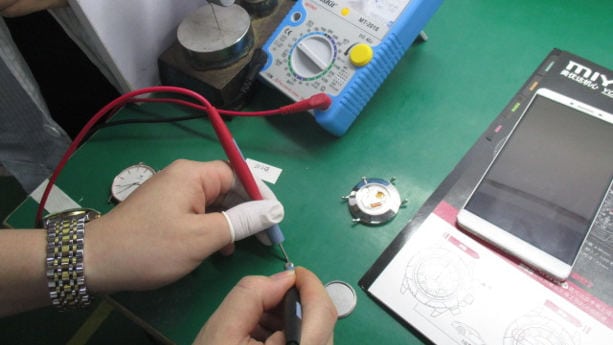
Lanna Watches AB (Sweden) contacted Chinaimportal.com in October 2016. In this Case Study, you will learn how they used the Starter Package 2017 to develop and launch their first product.

All the features and functions mentioned in this Case Study are included in the Starter Package.

Note: The process in this case study can be applied to any product category, not only watches.

All companies and names mentioned in this case study have been altered. The case study is based on email records, images and protocols.

1. Prepare Product Specification

Before even sending a first email to a supplier, the customer created a product specification. This exact process is outlined in Part 1: Create Product Specifications of the Starter Package.

a. Download template and create spec sheet

As all suppliers make products according to the specifications, John (co-founder of Lanna Watches) had to be sure that all technical details were covered. To make sure that they get their specification right, they followed the process in Part 1: Create Product Specification (Above).

To speed up the process, they used Template 1A: Product Specification Sheet, to list all technical details and quality requirements.

b. Research all applicable product regulations (using Module 7 of the Starter Package)

As Lanna Watches AB is based in the European Union, which is also their primary market, compliance with all applicable product regulations is crucial.

Failing to ensure compliance can result in the goods being seized by the customs authorities, something that would be disastrous to a small startup like Lanna Watches.

The problem, for John and his partner, was that they have no clue which regulations apply to Watches in the EU. Luckily for them, the Starter Package includes an entire module for product regulations, in the EU and US, for all the products we cover.


Continue reading Case Study: How We Helped a Customer Launch a Watch Brand in 4 Steps

How to Resolve a Dispute with Your Supplier

Posted on

dispute resolution in China

Picture that you’ve paid up thousands of dollars upfront, only to receive a delayed and defective batch of products. Or, what if your supplier decides to double the price, halfway through production?

Sending angry emails at 1 AM will not get you far, but there are methods that can help you gain the upper hand in a dispute with a contract manufacturer.

Methods that I will present in this article.

But first, we need to draw the line between you being disappointed, disputes and outright frauds.

This is how I define a supplier dispute

If you the supplier has failed to comply with the written product specifications, quality requirements and order terms – signed and stamped in a contract – and refuse to comply, then you are in a dispute. Continue reading How to Resolve a Dispute with Your Supplier