List of Product Testing Labs in China: An Overview

Posted on 19 Comments

accredited laboratories

Lab testing is the only way to verify that your imported product is compliant with all applicable safety standards and substance regulations. However, not all test reports are equal, as only those issued by accredited testing companies are actually valid.

For example, the CPSC in the United States lists testing labs around the world that are accredited, meaning that they only accept test reports issued by the listed companies.

In this article, we list some of the world’s leading testing labs in Mainland China and Hong Kong:

  • QIMA (Formerly Asiainspection)
  • CMA Testing
  • SGS
  • TUV
  • Bureau Veritas
  • Intertek

In addition, you’ll also get these questions answered:

  • Why do I neeed an accredited testing laboratory to check my products?
  • FCC Accredited Labs in Asia
  • FDA (USA) Accredited Labs in Asia

Continue reading List of Product Testing Labs in China: An Overview

Factory Inspections & Audits in China: A Complete Guide

Posted on 5 Comments

factory inspection

Found a supplier online but not sure if they’re everything they claim to be? Factory inspections, which can easily be booked online, can quickly put boots on the ground and verify what’s actually going on behind the factory gates.

In this article, you will learn everything importers and Amazon sellers should know about factory inspections:

  • What is a factory inspection?
  • What is not covered in a factory inspection?
  • How can a factory inspection or audit help my business?
  • At what stage should we book a factory audit?
  • How much does a factory audit cost?
  • Can we visit the factory ourselves?
  • How long in advance do we need to book the inspection?
  • What is the difference between a quality inspection and a factory inspection?
  • Should we always book a factory inspection before deciding on a supplier?
Bonus Content
  • List of Factory Audit Companies
  • Factory Inspection Sample Report (PDF)

Continue reading Factory Inspections & Audits in China: A Complete Guide

[New] Starter Package: Upload & Share Files With Suppliers

Posted on

We have added a function to the Starter Package Dashboard that enables our users to upload files and share them directly with team members and suppliers. For example, you and upload, store and share:

1. Product specification files

2. Product images

3. Design drawings

4. Logo files and packaging files

5. Contracts

6. Quotations

7. Test reports, certificates and quality check reports

8. Shipping documents

This is available as of now for all Starter Package users. Continue reading [New] Starter Package: Upload & Share Files With Suppliers

Air Freight When Importing from China: A Complete Guide

Posted on 39 Comments

Suggestion: Watch the 10 minutes video tutorial before reading this article

Air freight can bring your cargo from a factory floor in China, to your warehouse, in a matter of days. However, Air freight is not a viable option for all sorts of cargo.

In this article, you will learn more about Air shipping costs, customs procedures, cargo restrictions, and insurance options when importing from China.

1. Air freight is the fastest mode of transportation

Air freight is superior to Sea freight in many ways. However, the primary reason to get your cargo delivered by air, is shorter delivery time.

While Sea freight can take a month from port to port (that depends of course on the destination), with a few more days spent on administration and wire transfers – Air freight can get your product from the factory floor to your office, in only 5 days.

The specific delivery time depends, as there are various classes of Airfreight, such as express and economy. Regardless, you will save plenty of time.

An interesting fact is that only 5% of the world’s international transportation, in terms of cargo volume, is delivered by air. However, if we instead look at the total value, that figures jump up to 30% of the world’s total. Continue reading Air Freight When Importing from China: A Complete Guide

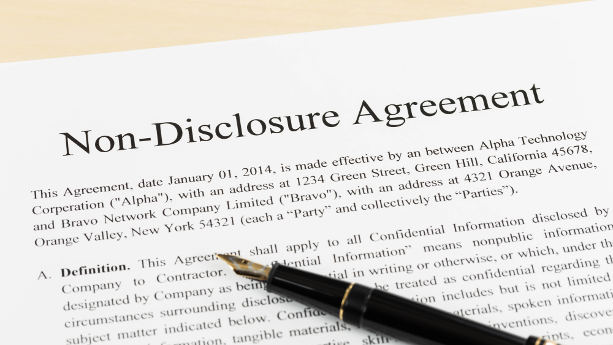
Do NDAs Work When Importing from China?

Posted on

NDA in China

Many Ecommerce business owners are, rightfully, worried about their suppliers duplicating their products. For many, a Non-Disclosure Agreement (NDA) seems to the logical method to prevent suppliers from ever making replicas.

It makes sense in theory. Make your supplier sign an NDA, and you go perpetual exclusive rights for that power bank or handbag you plan to sell on Amazon.

The reality is, as you will learn in this article, very different.

What is the purpose an NDA?

An NDA is a confidentiality agreement that is meant to prevent, for example, manufacturers from disclosing product information. This may include the following:

  • Design drawings
  • Technical drawings
  • Bill of materials
  • Artwork
  • Software

In theory, an NDA prevents a supplier from using your product specifications to manufacture products, or share them with other companies. The NDA also sets penalties, in case the supplier would fail to comply with the terms.

In addition, an NDA can be set to be terminated after a certain time, or when a milestone (i.e., the product is officially launched) has been reached.

When dealing with Chinese manufacturers, however, things are not that straightforward. Continue reading Do NDAs Work When Importing from China?

How to Find the Right Ecommerce Product: 5 Inspiring Concepts

Posted on

Finding the right product

I’ve spent the last 8 years helping Entrepreneurs go from idea to finished product. While I’ve dealt with both good and (really) bad product concepts – I am a firm believer in a more creative product conceptualization approach.

The Entrepreneurs that succeed are not the ones who happen to find a ‘best seller product’, or by chance identify a one in a million market gap on Amazon.com.

I’d even go as far as saying that I can’t see much of a correlation between how much money they put in, and their chance of success.

I know Entrepreneurs that made it big, investing less than US$10,000 on the whole product launch. I know others that spend ten times that amount, and didn’t even get a final prototype ready.

It’s all about coming up with something new and finding a unique niche in an increasingly crowded ecommerce space.

But, as I will explain in this article, that is a whole lot easier than you probably think.
Continue reading How to Find the Right Ecommerce Product: 5 Inspiring Concepts

Product Liability Insurance For Importers & Amazon Sellers

Posted on 9 Comments

product liability insurance

Product liability insurance for Importers (sometimes called Import liability insurance) can save you from financial ruin, in case your products would be the case of injury or property damage.

Falling back on your supplier is never an option, so get used to the fact that you will be on your own to deal with possible product liability claims in the future.

This is covered:

  • What is covered by a product liability insurance?
  • What is not covered?
  • For what kind of products is an insurance necessary?
  • Do I need a product liability insurance to sell on Amazon?
  • Can I get an insurance for the US if I sell in another country?

We also provide a list of companies offering product liability insurance products in the United States, the European Union and the United Kingdom, Australia, New Zealand and Canada.

What is product liability insurance?

A product liability insurance can protect your business against personal injury or property damage claims. If you sell a product that, for any reason, harms a customer or damage property, the insurance covers legal and court fees.

With a product liability insurance, you are unprotected. Injury or damage claims can cost hundreds of thousands of dollars.

It’s practically impossible to be completely certain that your products don’t pose any risk whatsoever to your customers – regardless of how many quality checks and lab tests you do.

These are a few examples what might go wrong:

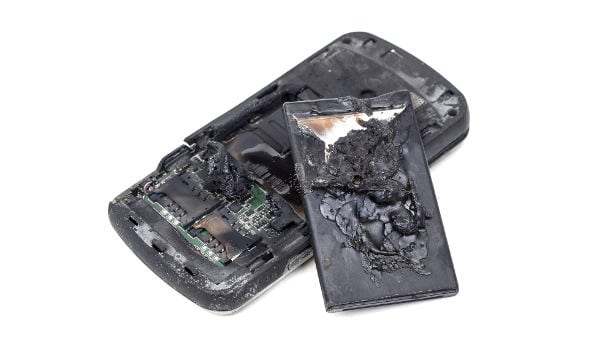
a. Li-ion battery powered devices: Fire hazard, explosion hazard

b. Children’s products: Choking hazard

c. Furniture: Fire hazard

d. Apparel: Choking hazard

e. Food contact materials. Food and beverage contamination hazard

While T-shirts are much less prone to explosions, compared to high capacity power banks, the risk that you will face a claim is always present. Continue reading Product Liability Insurance For Importers & Amazon Sellers

[Case Study] Launching a Watch Brand on Kickstarter: By Reinder and David from DR.W.

Posted on

Kickstarter watch

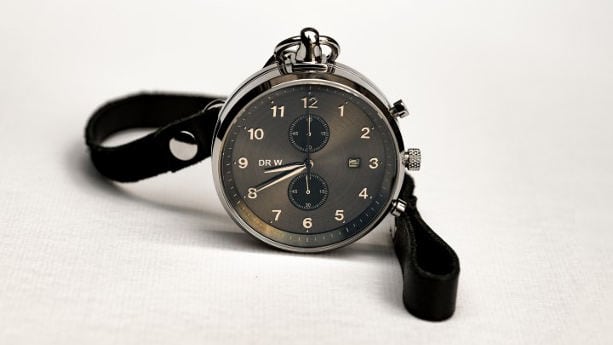
DR.W. signed up for the Starter Package in late 2017. Today, they have successfully developed a new type of watch that can be used as a wristwatch and a pocket watch.

Keep reading, and learn how they went from idea to supplier sourcing and a working prototype.

At the time of writing, they are also getting ready for their Kickstarter campaign. One reason is obviously to raise funds, but crowdfunding today is as much about funds, as it is about exposure and proof of concept – before a wider product launch.


DR. W. successfully raised €36,770 on Kickstarter

Visit this page to learn more about their product.


Reinder and David, please tell us a bit about yourself and what you did before you started DR.W.

Thank you for the introduction, Fredrik, and ‘hello’ to all the readers.

We are from the Netherlands where we grew up in the same northern region and went to the same university.

We got to know each other about seven years ago when we both started our first job, a traineeship, for a Dutch multinational.

We both had an interest in watches and found out that we had a shared dream of creating our own watch at some time. Although it took some time we are eventually getting there!

design process

So, why did you choose to launch a watch brand?

So we both had this shared goal to create a special watch at a certain moment since we both like watches. Reinder collected many different watches over time. David, at the other hand, was still looking for that perfect watch that he could not find.

We brainstormed about how our ‘perfect watch’ could look like and how we could make it really special.

Eventually, after a couple of years, we were inspired by a real-life problem that Reinder’s brother faced during work. He works in a hospital and is not allowed to wear wrist watches for hygienic reasons.

Alternative timekeepers (for example pocket watches) are limited in choice and also medics might like to wear a wristwatch outside work. Therefore, we came up with a new watch concept that allows you to switch from a wristwatch to a pocket watch (and reverse) in just a few seconds!

Why do we think our watch is made for everyone? Because it is fashionable and it will fit basically every dress code.

Because it will suit all practical occasions, including hygienic restrictions. Because it is a timepiece representing the history of the watch. And, last but not least, because we believe it looks great! Switch your style in just a few seconds! Continue reading [Case Study] Launching a Watch Brand on Kickstarter: By Reinder and David from DR.W.

The Future of Manufacturing in China: 2018 Edition

Posted on 7 Comments

future of manufacturing in china

Are Aliexpress sellers going to take over ecommerce in the whole world?

Are Chinese factories about to finally start acting like professionally managed companies?

Or, are they just about to lose out big time to suppliers in Vietnam and India?

Nobody knows for sure.

But I have a set of opinions to share, about what manufacturing in China looks like today, and what we’ll see in the years ahead. Continue reading The Future of Manufacturing in China: 2018 Edition

How to Make Design Changes to An ODM Product

Posted on 2 Comments

Suggestion: Watch the 10 minutes video tutorial before reading this article

Changing the design of an existing private label (ODM) product can save you both time and money – compared to creating your own custom designed product. At least in theory.

In this article, I explain how to implement the following changes:

  • Logos and other prints
  • Colors
  • Materials
  • Components
  • Product design

I will also explain why ‘small design changes’ can sometimes be far more complicated, expensive and time consuming than you might think.

a. Logos and other prints

Logo printing or engraving requires no special technical capability. Virtually all manufacturers listed on Alibaba.com and Globalsources.com offer branding.

All you need to do is to provide a logo file, and the following information:

  • Print type (i.e., engraving or screen print)
  • Color (i.e., Pantone)
  • Position (i.e., centered)
  • Dimensions (XX x XX mm)

You can use various file formats, including .jpeg and .png. However, I recommend that you use a .ai (Adobe Illustrator) or .eps. Continue reading How to Make Design Changes to An ODM Product